
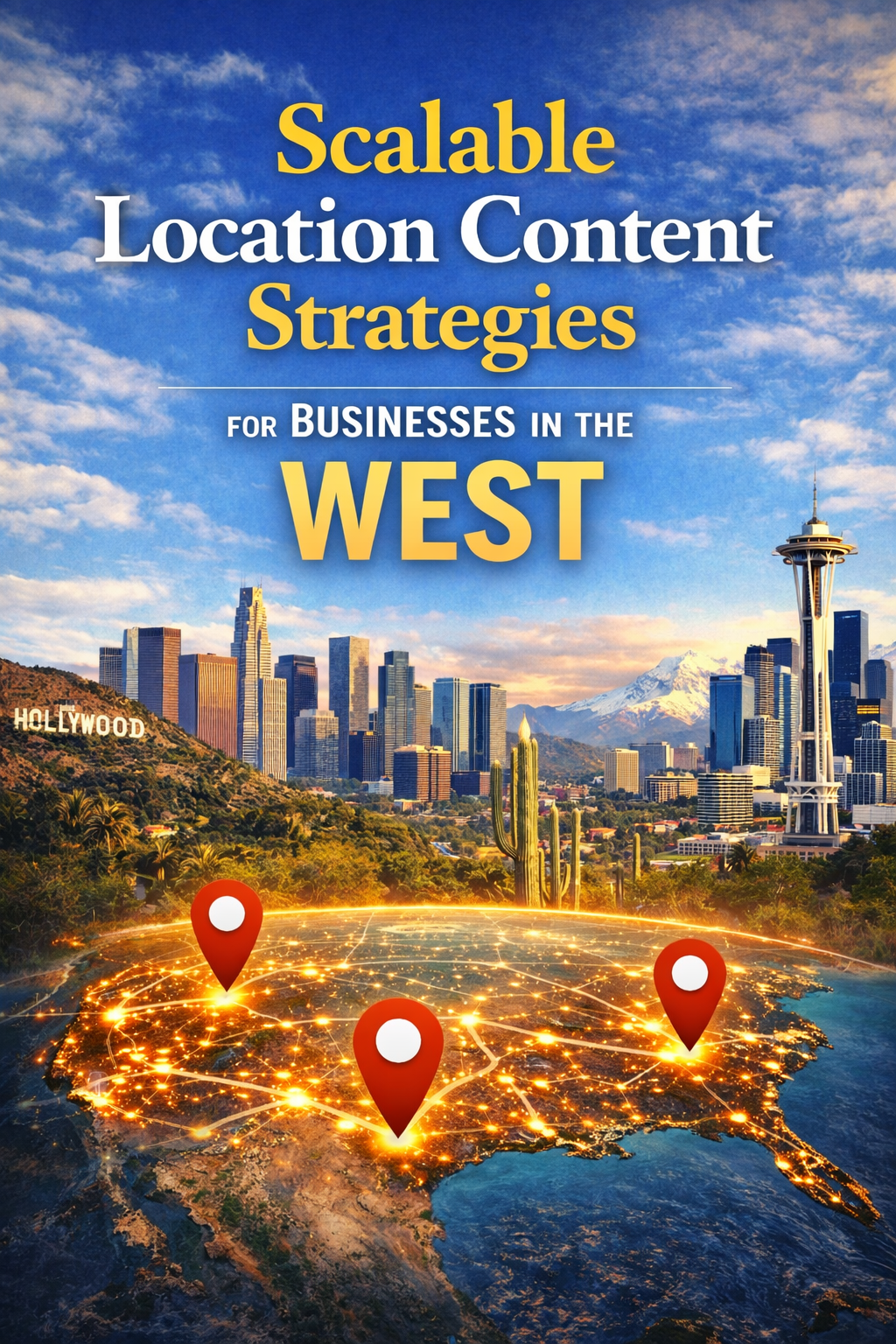
The Western United States contains some of the country’s most diverse business markets. From major economic centers like Los Angeles and Seattle to rapidly expanding cities such as Phoenix, Denver, and Salt Lake City, businesses in the region often serve customers across large geographic areas.
This wide regional spread creates a challenge for companies trying to scale their online visibility. How can a business target multiple Western markets while keeping its location pages valuable for both users and search engines?
A structured location content strategy allows businesses to expand into new cities while maintaining strong SEO performance. By organizing content around regional hubs, state pages, and city-focused content, companies can build authority across the West without creating repetitive pages.
Below are several strategies businesses can use to scale location-based content effectively throughout the Western United States.
Build Regional Hub Pages for Major Western Markets
The West includes several major metro corridors where businesses often serve customers across surrounding cities and suburbs. Creating regional hub pages helps businesses target entire metro markets while connecting related location pages together.
For example, the Los Angeles metropolitan area includes dozens of communities across Southern California. A regional hub page can introduce the broader market while linking to specific city pages throughout the region.
Western regional hubs may focus on areas such as:
- Los Angeles metro region
- San Francisco Bay Area
- Seattle regional market
- Denver metropolitan corridor
These hub pages help capture broader regional searches while strengthening the structure of location content across the site.
Create State-Level Pages for Western Markets
The Western region covers a wide range of states with distinct industries and economic drivers. State-level pages allow businesses to target broader geographic searches while providing context about the markets they serve.
State pages can introduce the business landscape within the state and link to major city pages throughout that region.
Examples might include:
- California business markets
- Washington regional industries
- Arizona growth corridors
- Colorado economic hubs
These pages also help capture search demand from users researching services across their entire state rather than within a single city.
Develop City Pages for Major Western Cities
City-level pages remain the foundation of most scalable location strategies. The West includes many large metropolitan areas where local search demand remains strong.
Cities such as Los Angeles, San Diego, Seattle, Phoenix, and Denver support large business ecosystems with unique regional industries. Creating city pages tailored to these markets allows businesses to connect their services with local companies.
A city page might include:
- Overview of the local business landscape
- Services offered within the city
- Nearby service areas or suburbs
- Regional industry context
By highlighting the characteristics of each market, businesses can keep location content useful while avoiding duplicate pages.
Incorporate Western Industry Context
The Western United States supports a wide variety of industries, including technology, entertainment, aerospace, tourism, agriculture, and renewable energy. Referencing these industries within location pages helps connect services with the economic realities of each region.
For example, technology plays a major role in California and Washington, while tourism and hospitality are central to many markets in Nevada and Hawaii. Cities such as Denver and Phoenix continue to attract growing technology and startup ecosystems.
Including regional industry references helps location pages feel more relevant and informative for readers.
Use Internal Linking to Connect Regional Content
Internal linking plays an important role in scaling location content effectively. Regional hub pages should connect naturally to state pages and city pages within the same geographic cluster.
For example:
- Western hub page → California page → Los Angeles city page
- Western hub page → Washington page → Seattle city page
- Western hub page → Arizona page → Phoenix city page
This layered linking structure helps search engines understand the geographic relationship between pages while guiding users through related markets.
Maintain Consistent Geographic Signals
When expanding location content across the Western United States, consistency becomes essential. Service descriptions, geographic coverage, and business messaging should remain clear across all pages.
Location pages may reference nearby cities, regional markets, and major transportation corridors where relevant. These signals help reinforce the geographic focus of each page for search engines.
By maintaining consistent location signals while tailoring content for individual markets, businesses can scale their regional presence effectively.
Expanding Location Content Across the Western United States
Businesses operating across the Western United States often serve customers across large and diverse geographic regions. A structured location content strategy helps companies expand visibility while keeping their website organized and easy to navigate.
By combining regional hubs, state pages, and city-level content, businesses can build authority across Western markets while positioning themselves for future expansion.
This layered approach allows companies to grow into new cities and regions while maintaining strong search performance across the West.
If your business is expanding across multiple cities or states in the West, a well-structured location content strategy can help you reach the right markets while strengthening your regional search visibility. The team at Thackstone works with businesses to develop scalable SEO frameworks that support long-term growth.
If you’re ready to improve your location-based SEO strategy, contact Thackstone to discuss how a scalable content approach can help your business expand across Western markets.
 Thackstone