
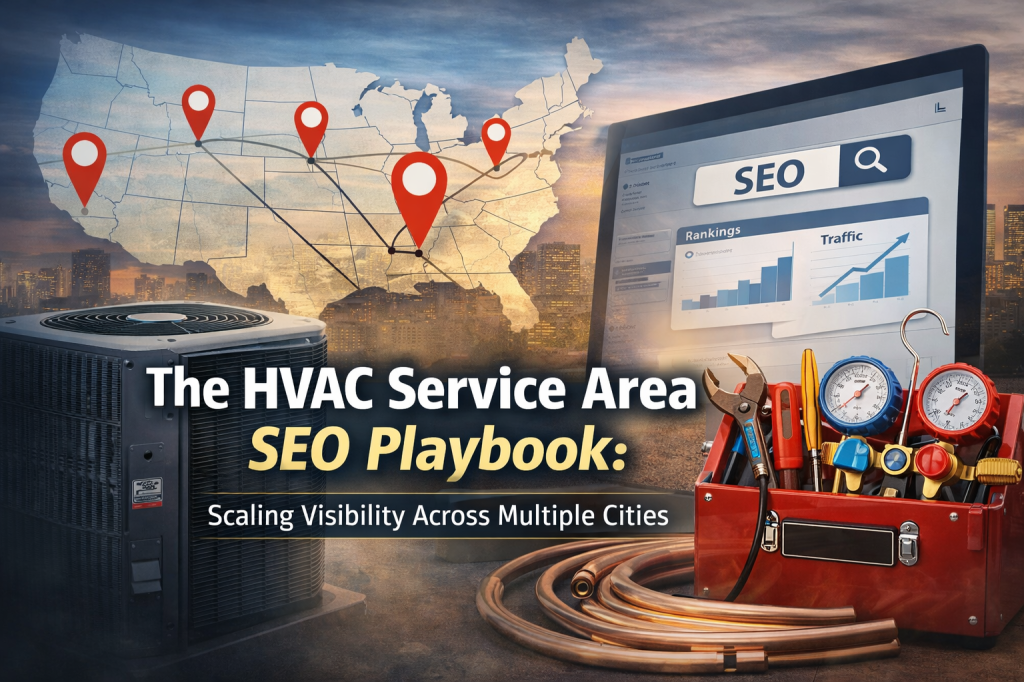
In my experience working with multi-location service businesses, HVAC companies face a unique challenge when it comes to local SEO. Most HVAC companies don’t serve just one city; they typically cover large service areas that include dozens of nearby towns and suburbs. Yet many websites still rely on a single location page or a few basic city pages that fail to reflect how the business actually operates.
That approach rarely scales well. When every location page looks the same or fails to clearly define the service area, search engines struggle to understand where the company truly provides services.
Over the years, I’ve seen HVAC companies dramatically improve their search visibility by restructuring their location content. When the site clearly communicates the service footprint and connects related markets together, it becomes much easier to rank across multiple cities.
Below are several strategies that have consistently worked well when helping HVAC companies expand their local SEO presence.
Why HVAC Companies Struggle With Local SEO
HVAC companies usually operate in large service territories rather than single cities. A company based in one location may install or repair systems across an entire metro area and dozens of surrounding communities.
However, many HVAC websites fail to reflect this structure. Instead, they often rely on one generic “service area” page that attempts to cover every location.
This creates several problems:
- Weak geographic relevance
- Limited ability to rank in nearby cities
- Confusing service coverage for customers
- Poor internal linking between locations
Search engines prefer websites that clearly organize services around the communities they serve.
Building Location Pages Around Real Service Areas
One of the most effective changes HVAC companies can make is structuring location pages around real service markets rather than listing dozens of towns on a single page.
From what I can see, companies perform better when they focus on major population centers first. These cities typically generate the highest search demand for heating and cooling services.
Examples might include:
- Dallas HVAC services
- Phoenix air conditioning repair
- Denver furnace installation
- Atlanta HVAC maintenance
Once these core markets are established, nearby towns and suburbs can be incorporated into those city pages.
Strengthening City Pages With Local Signals
Strong HVAC location pages should include details that demonstrate a clear connection to the community. Generic pages that simply swap city names rarely perform well in competitive markets.
Instead, I’ve found that the most successful pages often include references to local conditions or service needs. HVAC services are closely tied to climate and seasonal weather patterns, which creates natural opportunities for localized content.
For example, a Phoenix page might reference extreme summer temperatures and emergency AC repairs, while a Minneapolis page could discuss furnace reliability during winter months.
These localized details help reinforce the relevance of the page.
Using Internal Linking to Expand Into Nearby Markets
As HVAC companies expand into more cities, internal linking becomes an important part of the location strategy. A well-structured site allows each location page to support the others.
For instance, a Dallas HVAC page might naturally connect to nearby communities such as Plano, Frisco, or Irving. This helps search engines understand the relationship between those markets while guiding customers toward nearby services.
In my experience, companies that link related service areas together tend to build stronger geographic authority over time.
Expanding Location Content Gradually
One of the most common mistakes HVAC companies make is launching dozens of city pages at once. When those pages lack unique content or clear geographic signals, they often struggle to rank.
A better approach is expanding location content gradually. Start with the primary markets where the business already receives the most service calls. Once those pages gain authority, additional nearby cities can be added.
This method keeps content quality high while steadily increasing the company’s geographic footprint.
Scaling Local SEO for HVAC Service Areas
HVAC companies rarely operate within a single city. Their success often depends on reaching customers across an entire metro area or region.
A structured location content strategy helps make that expansion visible to search engines. By organizing pages around key service markets, incorporating local signals, and linking nearby communities together, HVAC companies can strengthen their local search presence over time.
When done correctly, this approach allows service businesses to grow into additional cities while maintaining strong visibility across their entire service area.
Professional Blog Posts for HVAC companies Serving Multiple Cities
If your HVAC company serves multiple cities or large service areas, a structured location SEO strategy can help improve visibility across the markets you serve. The team at Thackstone helps service businesses develop scalable SEO frameworks designed for long-term growth.
Contact Thackstone to learn how a strategic location content approach can help your HVAC company expand into new cities while maintaining strong local search performance.
 Thackstone